Tessarium – A tile editor for pixel worlds
A tile editor for pixel worlds
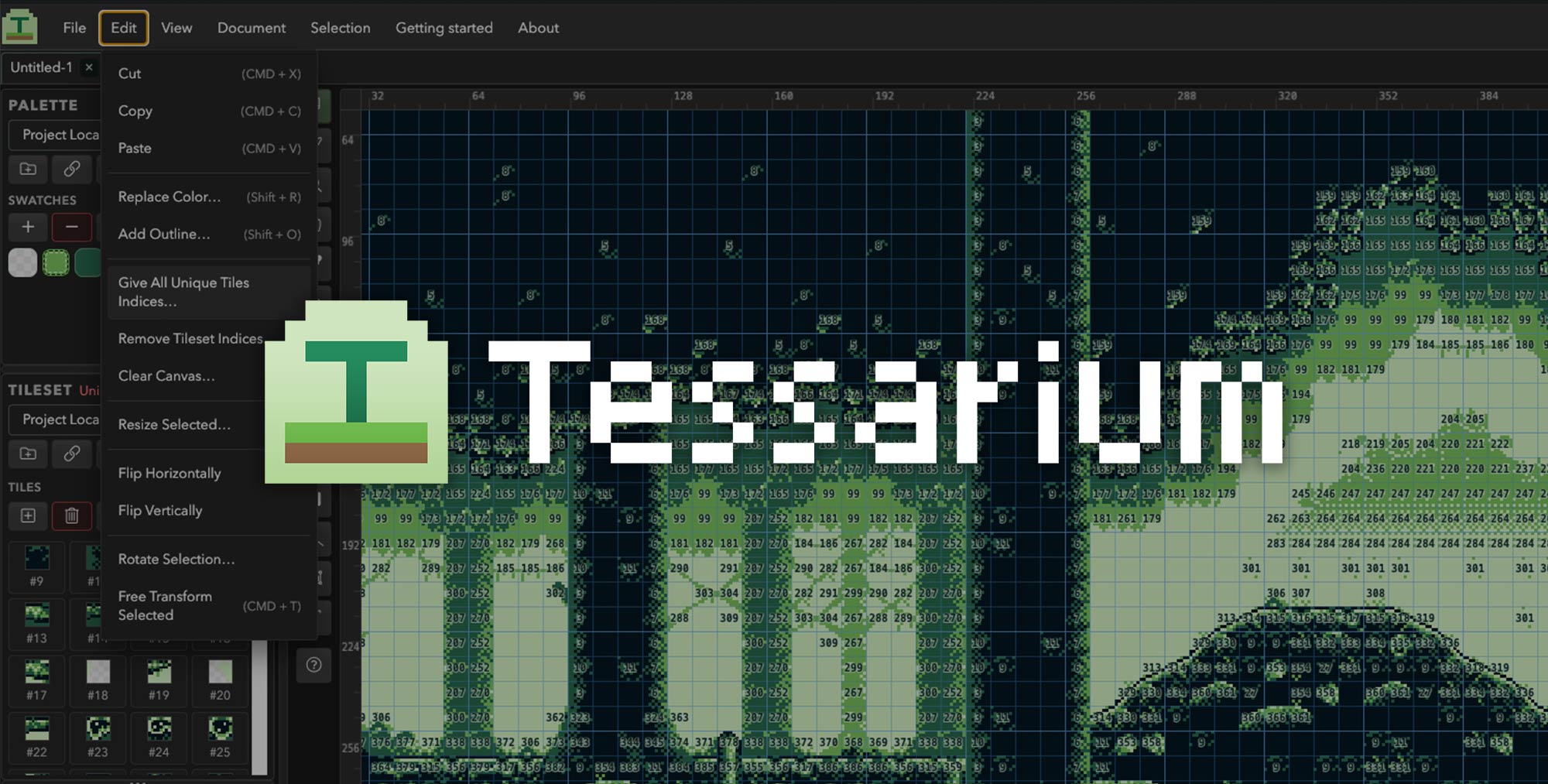
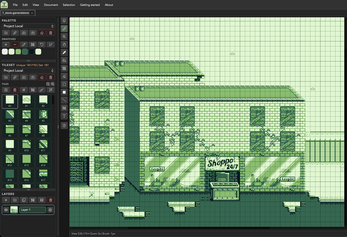
Tessarium is a tile-first retro pixel art level editor, built for Game Boy DMG/Color development and smoother GB Studio workflows.
Designed around real-world game development use, Tessarium focuses on fast level building while keeping large projects organised and allowing shared assets between levels. It was originally created for my own workflow, with features aimed at speeding up tile-based level design.
Currently in Alpha and changing quickly. Feedback and suggestions always welcome.
Note: the browser version has limitations but should be a good way to try out the app. The desktop builds have full file features. See special installation notes for the MacOS installer version at the bottom of this page.
Key Concepts
Tessarium combines direct-on-canvas drawing with linked tiles:
- Edit a tile once, and every instance updates across your level
- Build reusable tilesets that can be shared between projects
- Work quickly on the canvas and use built in tools to optimise your tiles usage
Features
- Tile-first workflow with linked tile editing (change once, update everywhere)
- Shared tilesets and palettes – create, link, pull and update across levels built with shared tiles
- Draw directly on canvas, then convert to tile(s) with CMD/CTRL + Click
- Tile optimisation tools: Reidentify, Merge Duplicates, Remove Unused, and one-click Optimise
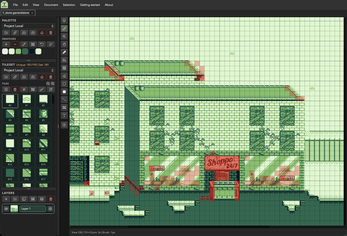
- Tile usage heat-map to spot costly unique tiles and manage limits with tile counts
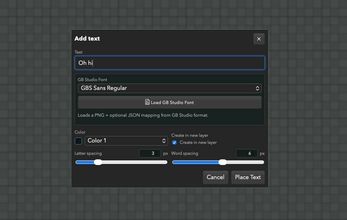
- GB Studio font support – load custom fonts and place directly into levels
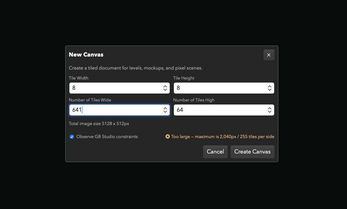
- GB Studio dimensions check – check a new canvas against level limits, both in dimensions and stopping non whole tile dimensions (causes GB Studio compile issues)
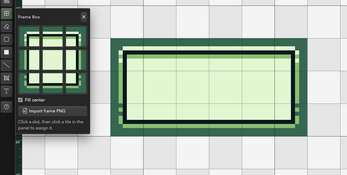
- GB Studio UI border boxes – import your projects dialogue frames and use it to draw borders and boxes of any dimensions.
- Game Boy palettes (DMG defaults + custom swatches and presets)
- Quick tile fill tools – solid, border, solid and gradient dither fills
- Precise tile edit mode – right click on a tile in your tile set to focus in and edit with the brush tool directly from the tileset (pinch/wheel to zoom in). Changes updated in real time in the canvas.
- Outline and recolour artwork automatically
- Marquee selection withpixel-precise and tile-snapped modes (CMD/CTRL tile snaps)
- Rulers, guides, and other essential editor tools
- Layer support (visibility, opacity, blend modes, merge actions)
Import / Export
- Import: PNG, PyxelEdit (.pyxel) (more formats coming)
- Project format: .tsrium (includes tilesets and palettes)
- Export: PNG (GB Studio default), JPG, WEBP, project JSON
Status
Tessarium is currently in alpha.
Try in your browser or download builds for macOS*, Windows, and Linux for fully featured with proper local folder support.
*For the macOS app, you'll likely need to run in your terminal–
xattr -cr /Applications/Tessarium.app
Or on older version of MacOs right-click → Open. Then it should open fine. If there's eventually enough demand then I guess I'll cough up and pay for an Apple Developer account.